

Blog
Understanding RFID Card Dispenser Technology
Ever checked into a hotel using a self-service kiosk? The plastic key card that pops out seems simple, but it was personalized just for you in the two seconds before you touched it. This “magic” is happening in parking garages, transit stations, and event venues around the world, all thanks to one clever device.
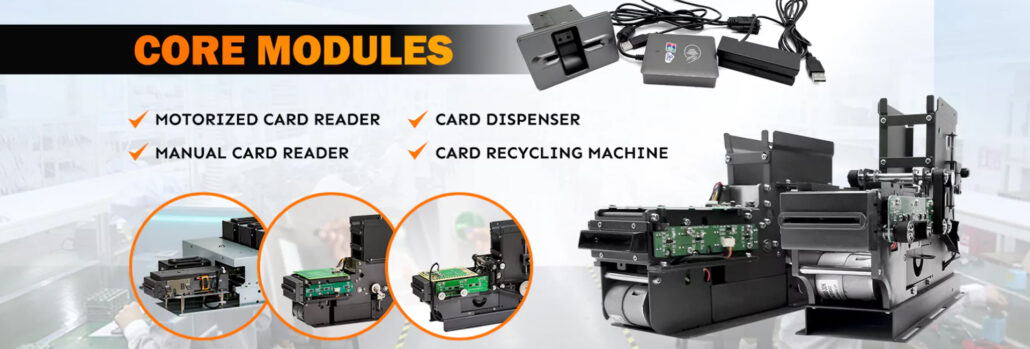
That machine is an RFID card dispenser. Think of it as two devices in one: part vending machine that physically gives you a card, and part short-range radio that wirelessly “talks” to it. This second job is what makes the technology so powerful.
This dual-action process is the secret behind any modern hotel key card dispenser system. As the card travels through the internal kiosk card vending machine components, it’s instantly programmed with your unique data—like a room number or access permissions. The machine isn’t just handing you a key; it’s creating one on the spot.

How Does It Hand You Just One Card Without Jamming?
Inside every automatic card issuing machine is a neat stack of blank cards, held in place much like paper in a printer tray. This storage unit, often called a card hopper, keeps the cards perfectly aligned and ready for action.
To dispense a card, the machine uses a precise mechanism of small rubber wheels or a tiny belt. Instead of just pushing the stack, it carefully grips only the bottom card and pulls it forward. This process is very similar to how an office printer grabs a single sheet of paper, ensuring just one card is delivered at a time.
This reliable, one-at-a-time dispensing prevents frustrating jams or double-feeds. But handing you a piece of plastic isn’t enough; the real power lies in making that blank card uniquely yours.
What Makes the Card ‘Smart’? A Quick Look at RFID and NFC
That blank piece of plastic becomes “smart” thanks to a technology called RFID, which stands for Radio-Frequency Identification. Unlike old hotel keys with a magnetic stripe that had to be swiped, an RFID card communicates wirelessly. It has a tiny, silent conversation with the machine using radio waves, with no physical contact needed. This is the core answer to what is RFID.
Inside each of these smart cards is a microchip that holds data and a small antenna to send and receive it. When the card moves near a reader, the reader’s signal energizes the chip, allowing them to talk. The difference between a magnetic stripe vs a smart card issuer is that the smart machine can instantly write new information to the card, not just read what’s already there.
This wireless conversation is a close cousin to the NFC (Near Field Communication) in your smartphone that enables mobile payments. The same “tap-to-pay” principle is what allows an NFC card issuing terminal to work so effectively, creating a quick, invisible handshake to personalize your card.
The Magic Moment: How the Machine Personalizes Your Card in Seconds
So, how does a blank card from the stack suddenly know to open your hotel room and not the one next door? This happens during its brief journey from inside the machine to the collection slot. As the dispenser pulls a single card forward, it glides over a special component called a reader/writer. This is the critical step where the card gets its unique instructions.
In the split second the card is over the writer, the machine sends a focused radio signal, programming the card’s chip on the fly with data like a room number, a membership ID, or an expiry date. This process of creating a temporary key on demand is the essence of modern access control card issuance, ensuring the card works only for you and only for the correct amount of time.
By the time that plastic card reaches your fingertips, it has been transformed from a generic blank into a secure, personalized key. This incredibly fast and reliable method is what makes these automated systems so powerful and convenient.

Beyond the Hotel Lobby: Where You Use This Technology Every Day
This technology extends far beyond the hotel lobby, appearing in many everyday situations. In a parking garage, an access control card issuance machine gives you a ticket at the entry gate. You also find them in subway stations for buying transit passes or at event venues for issuing temporary credentials, all without needing a person at a counter.
Have you ever wondered why the machine at the parking garage exit “eats” your ticket? That’s not a glitch; it’s a key feature. Many of these devices are a card dispenser with capture function. For single-use cards like a parking ticket, the machine is designed to issue the card upon entry and then retrieve and store it upon exit. This allows the cards to be securely managed or reused, making it the best card vending machine for parking systems.
Ultimately, this technology is all about enabling secure, 24/7 self-service. It’s what allows a gym member to sign up online and get their access card at 2 a.m. or a remote office to manage visitor passes without a full-time receptionist. By combining the ability to create, dispense, and even recapture cards, these machines provide convenience and control in one smart package.
The Smart Tech Behind On-Demand Access
What once seemed like magic is a clear, two-step process: the device first grabs a blank card, then has a quick, wireless conversation with it to grant access just for you. This simple but powerful combination—part mechanical dispenser, part short-range radio—is the secret behind so much modern convenience.
This automated process reveals how security and personalization can be delivered on demand. By instantly creating a unique key, the technology solves complex access control problems for hotels, parking garages, and transit systems.
It isn’t just a machine spitting out plastic; it’s clever engineering that makes your world more seamless and secure, solving problems instantly and invisibly.