


Blog
Why Card Dispensers Seem Reliable During Testing But Fail Later in Real Deployments?

Many card dispenser systems perform flawlessly during testing but encounter reliability issues months after deployment. Learn why real-world environments, user behavior, maintenance realities and card variations often reveal problems that testing never exposes.
Quick Answer
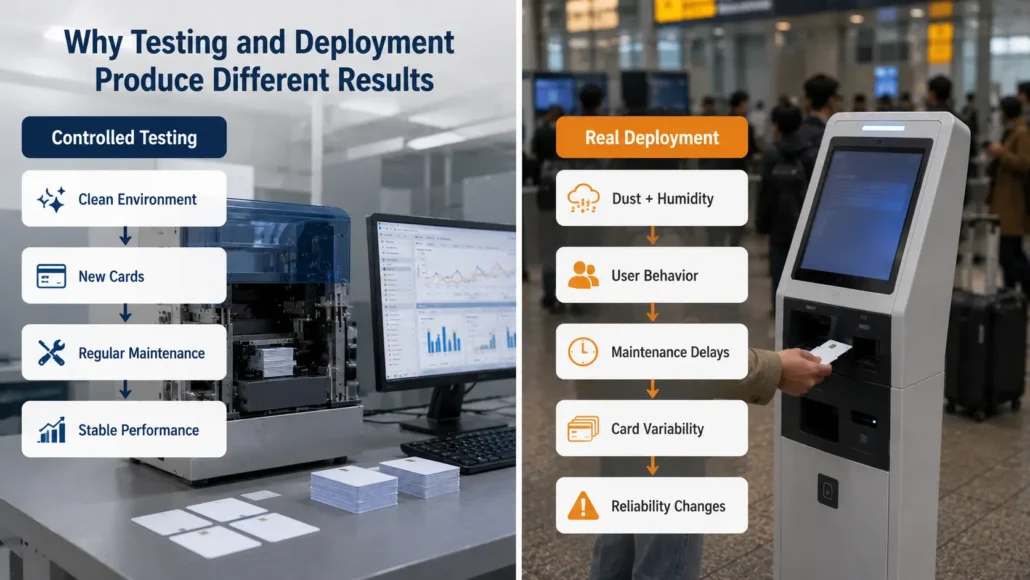
Card dispensers often seem reliable during testing because early tests usually use new cards, clean environments, careful loading, low transaction volume, and technicians nearby. After deployment, the same system must handle mixed card batches, dust, humidity, static electricity, user behavior, maintenance delays, and continuous unattended operation.
This is why system integrators should test card dispensers with real card samples, realistic hopper loading, expected transaction volume, environmental variation, and failure recovery scenarios before approving hardware for rollout.
Most Reliability Problems Don’t Start During Testing
That’s what makes them difficult.
If a card dispenser fails during factory testing, the problem is usually straightforward.
Engineers investigate.
Adjustments are made.
The issue gets fixed.
What frustrates many deployment teams is something entirely different.
The dispenser passes testing.
It passes integration.
It passes pilot deployment.
Everything looks stable.
Then six months later, service tickets start appearing.
Not everywhere.
Not all at once.
Just enough to make people uncomfortable.
And that usually leads to the same question:
“If the system passed all the tests, why is it having problems now?”
After enough projects, most teams discover the answer is surprisingly simple.
Because the real world was never part of the test.
Testing Proves a System Can Work
Deployment Proves Whether It Will Keep Working
This is one of the most important lessons in self-service projects.
Testing and deployment are not the same thing.
A laboratory proves functionality.
A deployment tests endurance.
A factory environment proves the mechanism works.
A real deployment proves whether it continues working after thousands of transactions, changing environmental conditions and unpredictable user behavior.
Those are very different challenges.
One engineer once described it this way:
Testing tells you what a machine can do.
Deployment tells you what people will do to it.
That distinction becomes more obvious with every year of operation.
The Real World Is Not a Test Lab
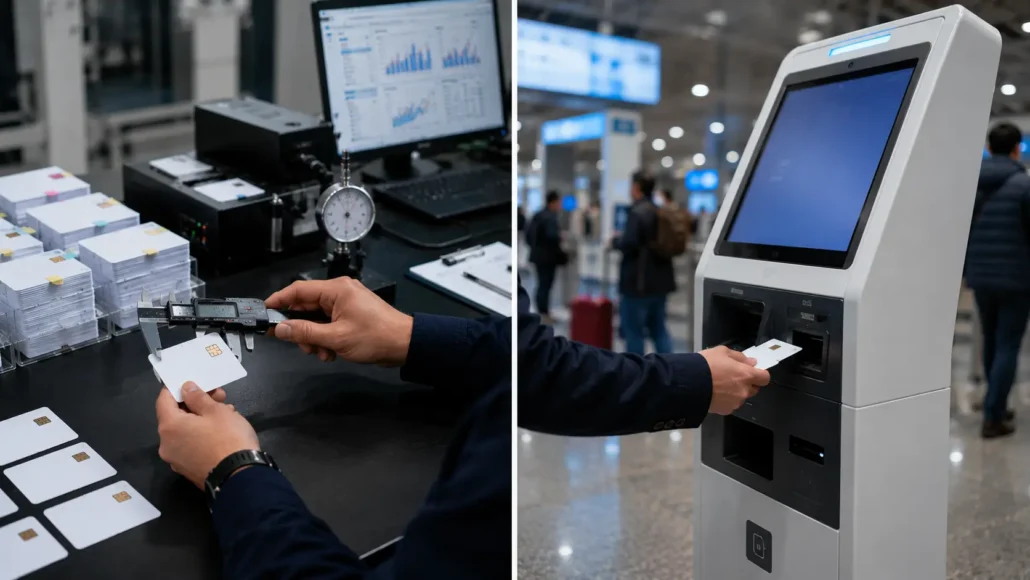
Most testing environments are controlled.
Clean air.
Stable temperatures.
Consistent humidity.
New cards.
Proper maintenance.
Predictable usage.
Real deployments rarely offer any of those advantages.
Dust accumulates.
Humidity changes.
Temperatures fluctuate.
Users behave unpredictably.
Maintenance gets delayed.
The dispenser itself may not have changed.
The environment around it certainly has.
And reliability is always influenced by both.
Nobody Tests for Six Months of Neglect
But Many Systems Eventually Experience It
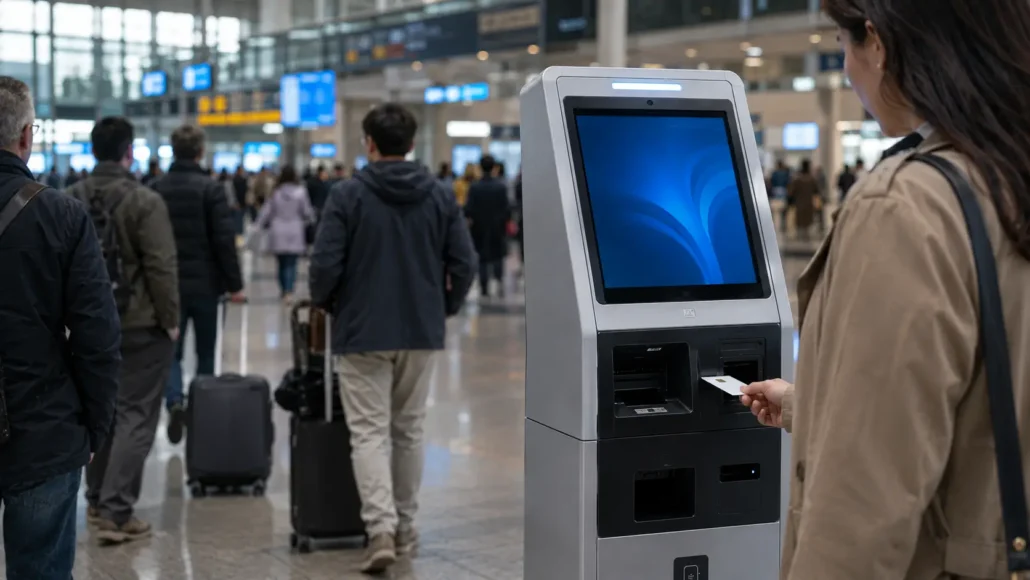
Project plans usually include maintenance schedules.
Cleaning procedures.
Inspection intervals.
Preventive service visits.
Everything looks organized.
Then operations begin.
Sites become busy.
Staff become occupied.
Other priorities emerge.
Maintenance gets postponed.
Not because anyone intended it.
Because reality is rarely as organized as the project plan.
One technician once said:
“Every kiosk has a maintenance schedule.
Not every kiosk receives it.”
That observation is funny because it is often true.
Users Never Follow the Script
Testing assumes predictable behavior.
Real users rarely cooperate.
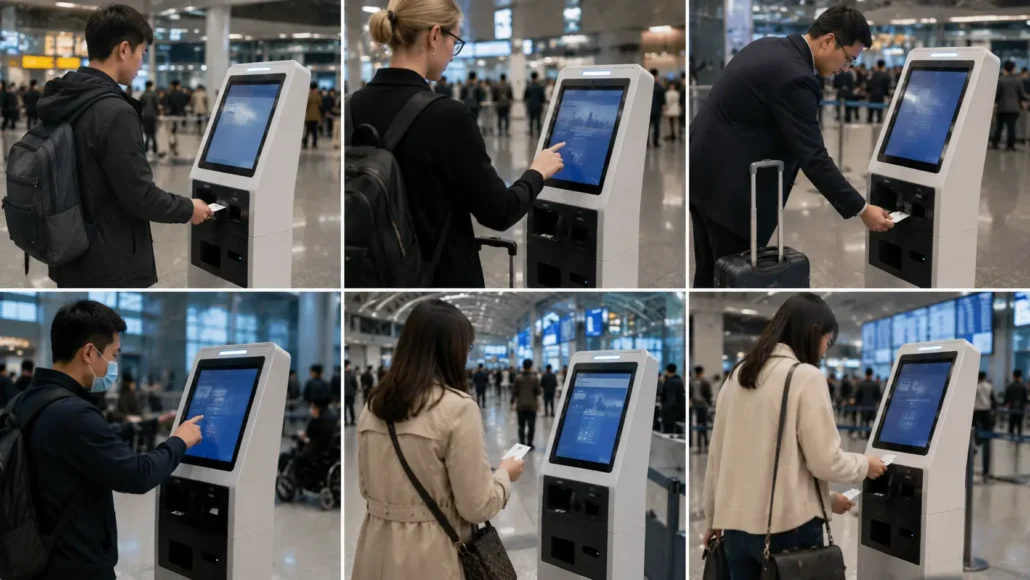
Some pull cards too early.
Some push cards back into the slot.
Some attempt multiple transactions.
Some repeatedly tap screens when nothing happens immediately.
Most users are not trying to damage equipment.
They are simply trying to complete their task.
The problem is that thousands of small interactions create conditions that testing rarely replicates.
A dispenser may process 500 perfectly executed transactions during validation.
The first week of public operation often introduces situations nobody anticipated.
Small Changes Have a Way of Becoming Big Problems
Not Immediately.
Gradually.
This is one of the most overlooked realities in unattended systems.
A little more dust.
A little more card wear.
A slightly different card batch.
A slightly delayed cleaning cycle.
Individually, none of these seem significant.
Together, they begin influencing reliability.
The frustrating part is that the change happens slowly.
Which means nobody notices the exact moment things start deteriorating.
Reliability rarely disappears overnight.
More often, it erodes quietly.
Most Problems Are Not Caused by One Thing
This is another lesson many teams learn the hard way.
People often search for a single root cause.
One component.
One software issue.
One defective batch.
Reality is usually messier.
A slightly worn roller.
Combined with a dusty environment.
Combined with cards from a new supplier.
Combined with delayed maintenance.
Each factor seems minor.
Together, they create the conditions for failure.
The dispenser becomes the place where all those variables finally meet.
The First Warning Sign Is Usually Repetition
Not Failure
Most people expect reliability problems to look dramatic.
An error code.
A jam.
A machine going offline.
What often happens instead is repetition.
A technician revisits the same kiosk.
Then returns again.
Then again.
The dispenser still works.
The kiosk remains operational.
Users continue completing transactions.
But the effort required to maintain that reliability keeps increasing.
Most operational problems do not become expensive overnight.
They become expensive through repetition.
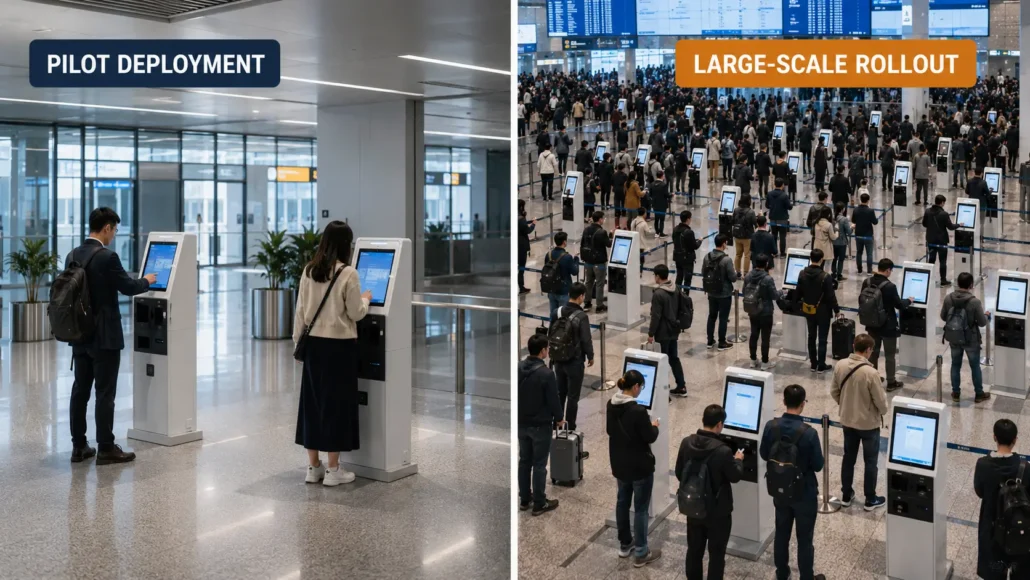
One of the Biggest Mistakes Is Trusting the Pilot Too Much
Pilot deployments are useful.
But they are not reality.
A pilot may involve:
- low transaction volumes
- close technical supervision
- new hardware
- ideal maintenance conditions
Those conditions rarely exist after large-scale rollout.
One deployment manager once said:
“The pilot proved the system worked.
Scaling proved what the pilot missed.”
That statement summarizes countless self-service projects.
Because many operational issues only appear when systems become busy.
Card Quality Often Changes After Launch
This is another factor many teams overlook.
The cards used during testing are often not the cards used one year later.
New suppliers appear.
Inventory gets replenished.
Storage conditions change.
Different production batches enter circulation.
Everything remains compliant on paper.
Yet dispensing behavior changes.
Many dispenser investigations eventually lead back to the cards.
Not because the dispenser changed.
Because the inputs changed.
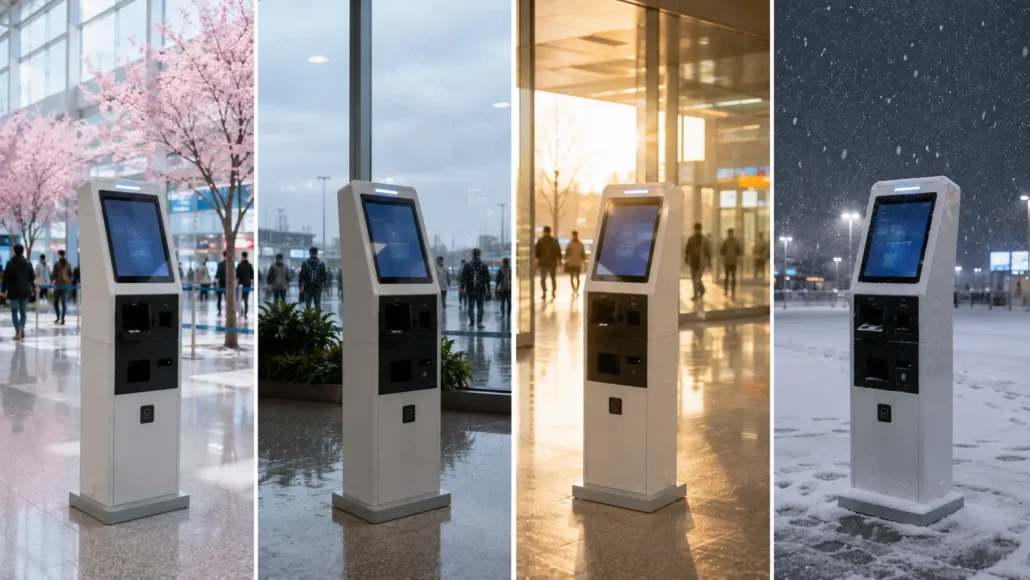
Environmental Conditions Never Stay Constant
One of the biggest differences between testing and deployment is time.
Testing is temporary.
Deployments are permanent.
A kiosk may experience:
- seasonal humidity changes
- temperature fluctuations
- airborne dust
- vibration
- varying usage patterns
The longer a system operates, the more environmental variables accumulate.
Most card dispensers don’t fail when they leave the factory.
They fail after meeting the real world.
What Experienced Teams Test Differently
After enough deployments, teams start changing their testing philosophy.
Instead of asking:
“Does the dispenser work?”
They begin asking:
“What happens after six months?”
“What happens after thousands of cards?”
“What happens when maintenance is delayed?”
“What happens when the card supplier changes?”
Those questions usually come from experience.
Because experienced teams understand something important:
Reliability is not proven by perfect conditions.
Reliability is proven by imperfect conditions.

What Changes After Enough Deployments?
One interesting thing happens as project teams gain experience.
The conversations change.
Early in a project, people discuss features.
Later, they discuss service records.
Early conversations focus on specifications.
Later conversations focus on operational friction.
The goal stops being:
“Can the system work?”
The goal becomes:
“Can the system keep working?”
Those are very different questions.
And the second one is usually harder.
Card Dispenser Testing vs Real Deployment: What Changes After Go-Live
| Testing Condition | What Happens During Lab Testing | What Changes After Deployment |
| Card condition | New, clean, flat cards | Worn, warped, mixed-batch cards may appear |
| Environment | Clean and stable | Dust, humidity, heat, and static may change behavior |
| Transaction volume | Low or controlled | Higher daily volume exposes rare issues |
| Operator behavior | Careful loading and inspection | Inconsistent field loading may occur |
| Maintenance | Immediate attention | Service visits may be delayed |
| User behavior | Minimal interaction | Users may pull, push, or retry unexpectedly |
| Software recovery | Simple test flow | Real transactions require safe exception handling |
| Fleet scale | One test unit | Multiple sites reveal variation between units |
The Most Reliable Systems Are Not Always the Most Impressive
This is a lesson that often surprises new teams.
The most reliable deployments are not necessarily the ones with the most advanced features.
They are usually the ones that tolerate reality well.
Dust.
Humidity.
Wear.
Human behavior.
Delayed maintenance.
Card variation.
Because those are the conditions every unattended system eventually faces.
Short Industry Takeaway
Most card dispenser reliability issues do not appear during testing.
They appear later.
When environmental conditions change.
When users behave unpredictably.
When maintenance schedules slip.
When card batches vary.
When thousands of transactions accumulate.
That is why experienced deployment teams eventually learn a simple truth:
Testing proves a system can work.
Deployment proves whether it will keep working.
And the first six months of operation often reveal more than six weeks of testing ever could.
Frequently Asked Questions
Why do card dispensers pass testing but experience problems later?
Because testing environments rarely replicate the environmental conditions, user behavior and operational realities encountered during long-term deployment.
Can maintenance delays affect dispenser reliability?
Yes. Dust accumulation, component wear and delayed cleaning can gradually reduce dispensing consistency over time.
Why are pilot deployments not always reliable indicators?
Pilots often operate under ideal conditions with lower transaction volumes and closer technical supervision than large-scale deployments.
How does card quality affect long-term reliability?
Changes in card suppliers, manufacturing tolerances and card wear can influence dispensing performance long after deployment.
What should integrators evaluate beyond functionality testing?
Environmental tolerance, maintenance accessibility, card consistency and long-term operational behavior should all be evaluated.
Why is pilot testing not enough for card dispenser approval?
Pilot testing may not expose long-term card wear, environmental variation, high transaction volume, maintenance delays, or multi-site operating differences.
How long should card dispenser reliability testing last?
There is no single fixed period. Testing should include enough cycles to simulate expected transaction volume, card batch variation, low-card conditions, and common failure scenarios.
What makes real deployment different from laboratory testing?
Real deployment introduces changing cards, changing environments, user behavior, unattended operation, service delays, and integration with other kiosk systems.
Recommended SNRO Hardware Solutions
RFID Card Dispenser Series
Suitable for:
- Hotel self check-in kiosks
- Visitor management systems
- Access control terminals
- Membership card issuing systems
Typical advantages:
- Stable card separation
- Industrial-grade dispensing mechanism
- Support for long-term unattended operation
- Flexible integration into self-service terminals
Motorized Card Issuer Solutions
Suitable for:
- Parking systems
- Ticketing kiosks
- Transit applications
- Loyalty and membership terminals
Typical advantages:
- Reliable card transport
- Consistent dispensing performance
- High-volume operation capability
- Reduced maintenance requirements
Industrial Mini PC Solutions
Suitable for:
- Self-service kiosks
- Smart locker systems
- Visitor management terminals
- Integrated kiosk platforms
Typical advantages:
- Industrial-grade reliability
- Continuous 24/7 operation
- Compact deployment footprint
- Easy system integration
Related Guides
Card Dispenser Reliability Series
- Why Double-Card Issues Happen in Card Dispenser Systems?
- Why Card Quality Causes More Dispenser Problems Than Many Teams Expect?
- How Dust and Humidity Affect Card Dispenser Reliabilit?
- Why Card Dispenser Maintenance Usually Gets Ignored Until Systems Scale?
Related Solutions
- Hotel Self Check-in Hardware Solutions
- Visitor Management Card Issuance Solutions
- Parking & Ticketing Hardware Solutions
- Smart Locker Hardware Solutions
- Self-Checkout Hardware Solutions
- Queue Management Hardware Solutions
Learn more about system architecture: Card Dispenser Hub
Planning a Long-Term Card Issuing Project?
Many dispenser issues that appear during deployment are not caused by a single component.
Card quality.
Environmental conditions.
Maintenance practices.
User behavior.
System design.
All of these factors influence long-term reliability.
If you’re evaluating card dispenser solutions for hotel kiosks, parking systems, visitor management terminals or other unattended applications, understanding real-world operating conditions is often just as important as evaluating technical specifications.
The most successful deployments are usually not the ones that perform best during testing.
They are the ones that continue performing reliably after years of real-world operation.
Preparing a Card Dispenser for Real Deployment?
SNRO can help review your card samples, expected transaction volume, kiosk layout, interface, SDK requirement, and maintenance plan before rollout. Early validation can reduce unexpected card dispensing problems after deployment.