


At a self-service kiosk, you buy a gift card and a single plastic card slides out. At a parking garage, a paper ticket appears instantly. Have you ever wondered how that machine grabs just one card from a stack of hundreds without a mistake?
These silent workhorses, known as card dispenser machines, are engineered to solve one surprisingly tricky problem: reliably separating and issuing a single card on demand. This flawless operation is critical for customer convenience and smooth operations. This article pulls back the curtain on this everyday ‘magic trick,’ revealing the clever method they use and where to spot these essential devices in your daily life.

The ‘Magic Thumb’: How Does a Card Dispenser Grab Just One Card?
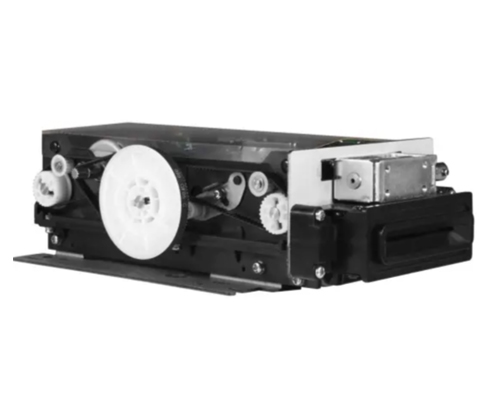
Have you ever tried to slide the top card off a fresh deck with your thumb? A card dispenser does something remarkably similar, but with far more precision. The secret isn’t a tiny robotic hand, but a simple part called a friction roller. Think of it as the machine’s tireless, grippy thumb, designed to do one job perfectly.
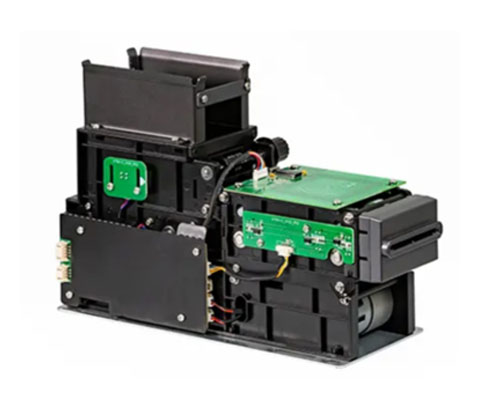
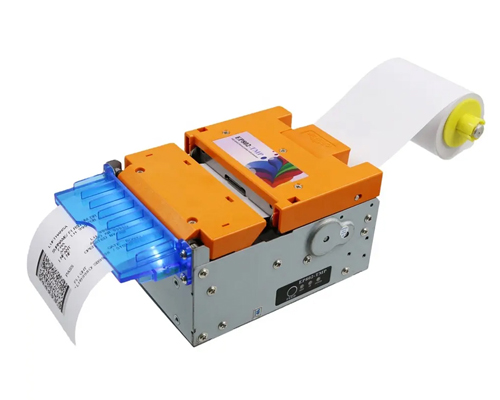
This special roller, often made of a soft rubber, presses down on the very top card in the stack. When the machine gets a signal to dispense, the roller spins and its tacky surface latches onto that single card, pulling it forward. This is the core of how a card dispenser works, using friction to neatly separate the top card without disturbing the rest of the pile.
But what happens if two thin cards are stuck together with static? That’s where a tiny, unseen sensor comes in. Positioned at the exit path, this sensor acts like a tiny electric eye, making sure exactly one card passes by. If it detects a card that’s too thick (a likely double-feed) or sees nothing at all, it can instantly stop the process to prevent a jam.
This combination of a grippy roller and a watchful sensor is an elegant solution, creating a reliable automatic card feeder mechanism. It ensures you get your ticket, gift card, or hotel key smoothly every time. Knowing this secret, you might be surprised how often you interact with these hidden robots.
More Than Just Gift Cards: Where You See These Hidden Robots Every Day
Knowing the ‘magic thumb’ mechanism, you’ll start seeing these machines everywhere. While excellent for automating gift card distribution in retail, their primary role is providing instant access where waiting isn’t an option. Each dispenser is a focused robot designed to save time and keep systems moving smoothly.
Think about the last time you traveled or ran errands. You likely encountered one of these dispensers as part of solutions for hotel key card management and many other daily tasks. You can spot them:
- At hotel front desks for 24/7 key card access.
- In subway and train stations for buying transit passes.
- At the entrance of parking garages to issue tickets.
- In arcades and amusement parks to load up game cards.
In each place, the goal is the same: to get a specific card into your hand quickly. These smart card vending applications replace a manual task, freeing up employees and giving you immediate service. But is the machine that hands you a thin paper ticket the same as one that gives you a thick plastic hotel key? The card itself changes everything.
Paper, Plastic, and Microchips: Why All Dispensers Aren’t Created Equal
A paper parking ticket and a plastic hotel key may seem similar, but to a dispenser, they are worlds apart. A parking ticket dispenser is fine-tuned for flimsy paper. In contrast, a machine handling thick plastic cards needs a stronger, more precise mechanism to avoid jams. The card’s material and thickness fundamentally change the machine’s design.
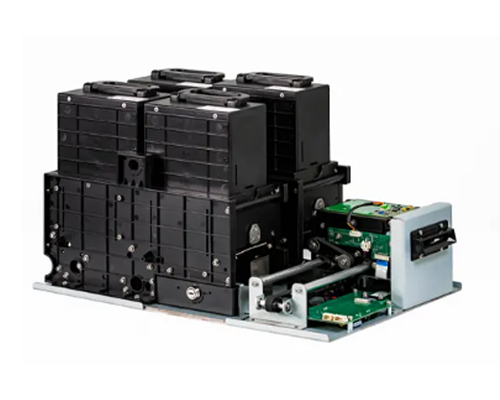
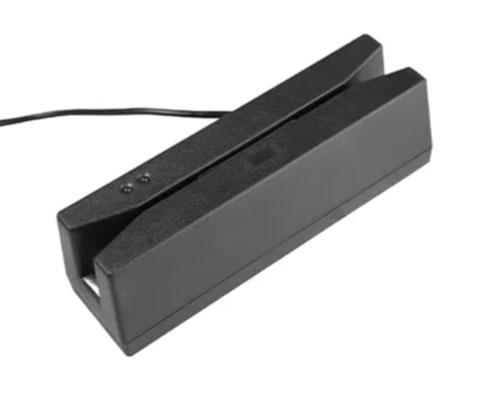
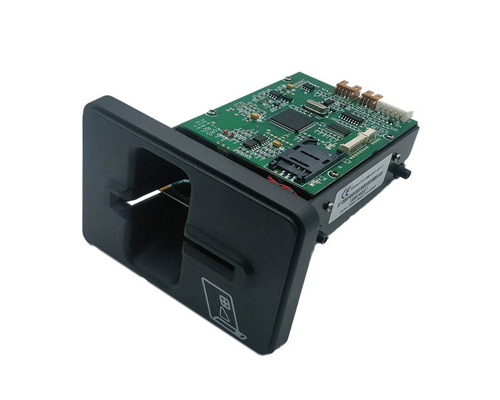
Beyond mechanics, some dispensers have a more complex job. A simple parking ticket machine just moves pre-printed paper. The card is passive and holds no unique data. In contrast, a hotel key dispenser is also a programmer. Before issuing the key, it digitally encodes it with the room number, checkout date, and security credentials. This involves communicating with a smart card, like an RFID card, which has an internal chip and antenna. A key benefit of an RFID card dispenser is creating a unique, secure key for each guest on demand.
This ability turns the dispenser into an intelligent programmer, a critical distinction for businesses choosing a machine. The need to encode data adds significant software and electronic complexity. If a machine can program a hotel key or a secure transit pass, could it also deal cards for a game night?

Could a Machine Deal Your Next Board Game Night?
That question isn’t as far-fetched as it sounds. The same core technology that hands you a parking ticket is already making its way to the kitchen table. Automatic card shufflers and dealers, once a novelty for serious poker players, are now being designed for family game nights. These gadgets solve the exact same problem as their industrial cousins: how to separate and move one card at a time, reliably.
Inside, you won’t find complex programming, just a simple and effective automatic card feeder mechanism. A set of rubber rollers presses onto the deck and whisks the top card away, dealing it to a player. This simple tabletop card issuing system can speed up games that involve a lot of cards, like Ticket to Ride or Uno. The search for the best automatic card dealer for board games is really just a search for a device that has perfected this one simple trick.
From a massive transit system to a deck of playing cards, the principle holds true. The technology isn’t about the card’s value, but about the simple, physical act of separating it from a stack. It’s a brilliant solution that works just as well for fun as it does for business.
What to Notice the Next Time a Machine Hands You a Card
The little black box at the parking garage or gift card kiosk is no longer a mystery. Its secret is a set of grippy rollers that skillfully slides a single card off a stack, just like dealing from a deck.
The next time you use a kiosk, listen for the quiet ‘whir’ of those rollers. Notice the difference in speed and sound between a machine handling a thin paper ticket versus a thick plastic key card. You can now spot this hidden engineering all around you, appreciating the quiet reliability that makes modern life convenient. You don’t just know how a card dispenser works; you see the cleverness hidden in plain sight.