

Blog
RFID Card Issuance in Self-Service Kiosks: What Integrators Should Know
Introduction
RFID card issuance has become a core function in many modern self-service kiosks.
From hotel self check-in terminals and visitor management systems to smart lockers and access control platforms, organizations increasingly rely on automated RFID credential issuance to improve efficiency, reduce staffing requirements and enhance security.
However, successful RFID card issuance involves much more than simply dispensing a card.
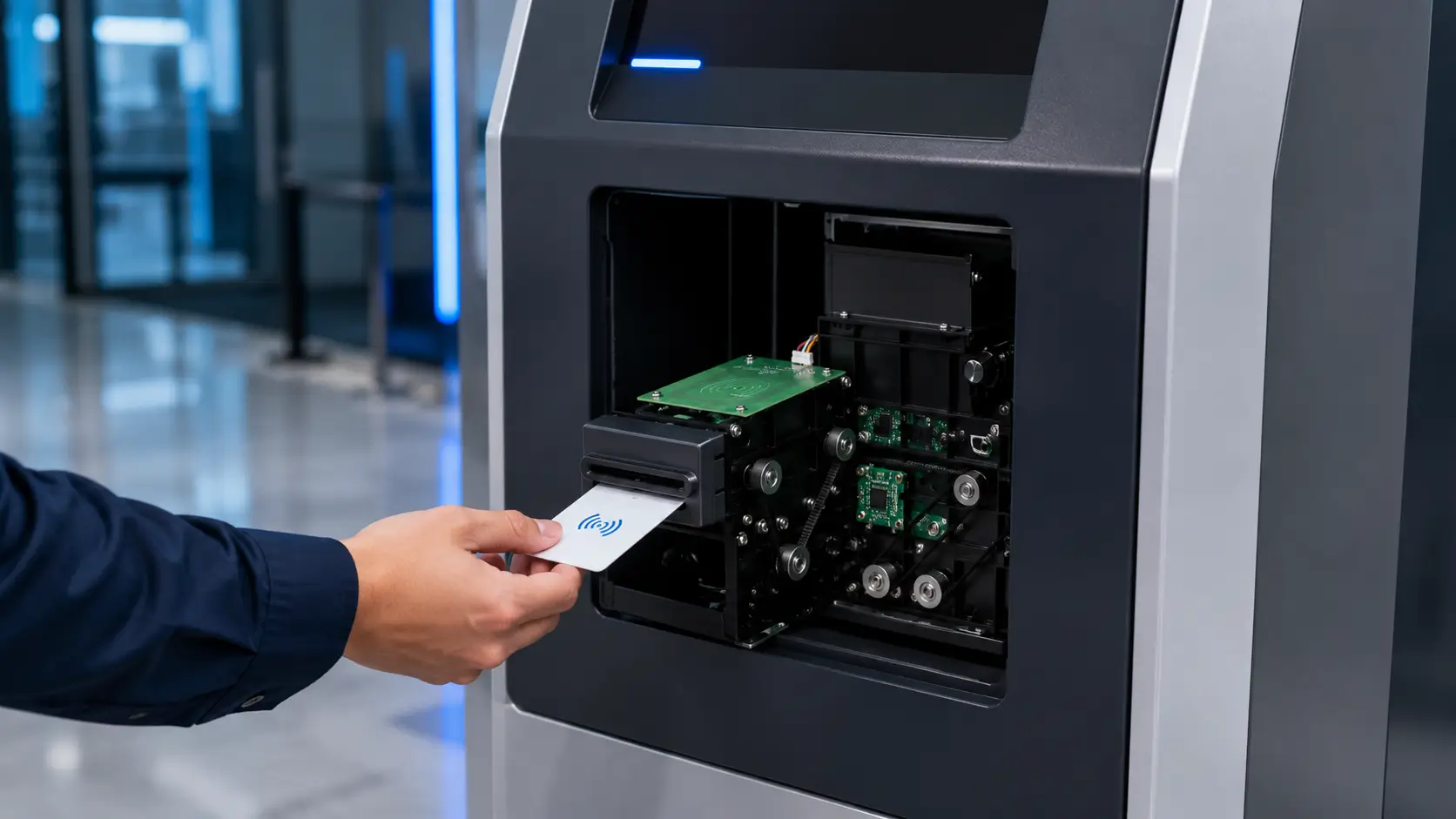
The system must correctly identify the user, communicate with backend software, encode the RFID credential, verify the data and then issue the card reliably.
For this reason, experienced system integrators evaluate RFID technology compatibility, card encoding workflows, dispenser architecture, software integration requirements and deployment conditions before selecting hardware for RFID card issuance projects.
Why RFID Card Issuance Has Become Increasingly Important
Traditional magnetic stripe systems continue to exist in some legacy environments, but RFID technology has become the preferred choice for many new deployments.
Common applications include:
Hotel Self Check-In Kiosks
Issuing RFID room cards automatically after guest registration.
Visitor Management Systems
Creating temporary access credentials for visitors and contractors.
Smart Locker Systems
Issuing RFID credentials for locker access and parcel collection.
Access Control Systems
Providing secure credentials for employees, visitors and authorized users.
Membership Card Issuance Kiosks
Automatically generating customer membership cards.
As self-service technology continues to expand, reliable RFID credential issuance becomes increasingly important.
What Experienced Integrators Usually Evaluate First
When evaluating RFID card issuance systems, experienced teams often focus on:
- RFID technology compatibility
- Encoding reliability
- Card dispenser integration
- SDK availability
- Linux support
- Credential security
- Access control compatibility
- Maintenance accessibility
- Hopper design
- Long-term operational stability
These factors often have a greater impact on project success than dispenser specifications alone.
How RFID Card Issuance Works
Although implementations vary, a typical RFID issuance workflow includes:
Step 1: User Authentication
The system verifies the user’s identity through:
- Reservation data
- Visitor registration
- Employee credentials
- QR code scanning
- Identity verification systems
Step 2: Card Preparation
The dispenser separates a blank RFID card from the hopper.
Step 3: RFID Encoding
The RFID reader/writer module writes credential data to the card.
Examples include:
- Room number assignment
- Visitor access permissions
- Locker access authorization
- Employee access credentials
Step 4: Verification
The system confirms that data was written successfully.
Step 5: Card Issuance
The encoded card is dispensed to the user.
A failure at any stage may result in issuance errors or unusable credentials.
 Understanding Common RFID Technologies
 Understanding Common RFID Technologies
Different projects use different RFID technologies.
Common standards include:
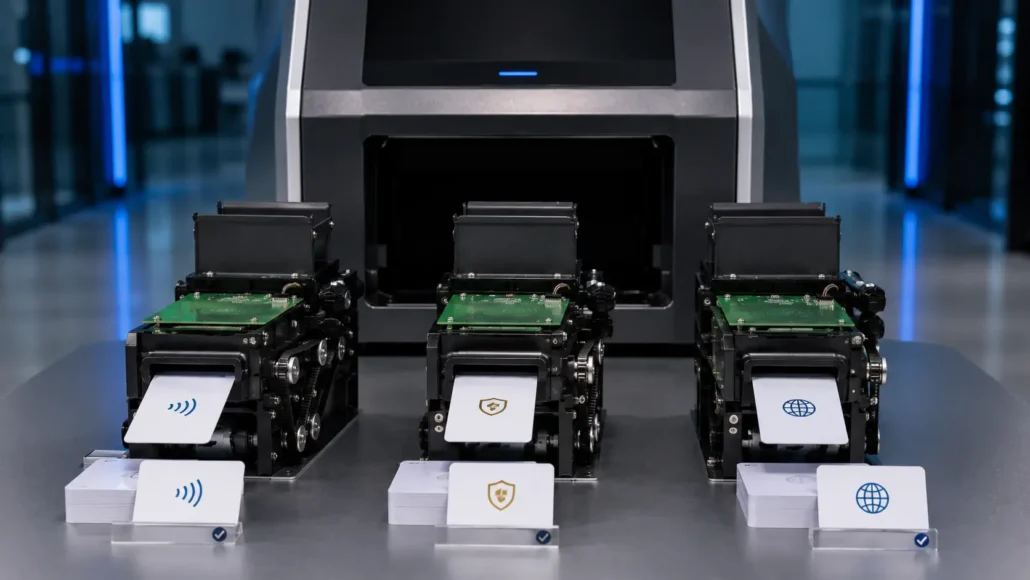
MIFARE Classic
Widely used in hospitality, visitor management and access control applications.
MIFARE DESFire
Provides enhanced security and encryption capabilities.
ISO14443
Commonly used in contactless smart card systems.
ISO15693
Often used for longer-range identification applications.
NFC-Compatible Credentials
Used for mobile credential integration and smartphone-based access systems.
Before selecting hardware, integrators should verify compatibility with existing card infrastructure.
Why RFID Compatibility Should Be Verified Early
Many deployment challenges occur because RFID requirements are not fully defined during project planning.
Important questions include:
- Which RFID standard is required?
- Does the card require encryption?
- Will credentials be encoded locally?
- Does the access control platform support the selected card type?
- Are future upgrades expected?
Changing RFID architecture later in the project can significantly increase development effort and deployment costs.
RFID Card Encoding vs Card Dispensing
A common misunderstanding is that card encoding and card dispensing are the same process.
In reality they are separate functions.
RFID Encoding
Responsible for:
- Writing credential data
- Personalization
- Security configuration
- Access authorization
Card Dispensing
Responsible for:
- Card separation
- Card transport
- Card delivery
- User interaction
Both functions must work together to achieve reliable RFID card issuance.
Projects that focus on dispensing hardware while ignoring encoding requirements often encounter integration challenges later.
Why Hopper Design Still Matters
Even with advanced RFID technology, physical card handling remains critical.
Experienced deployment teams evaluate:
- Card separation consistency
- Hopper stability
- Double-card prevention
- Dust resistance
- Card stack management
Poor hopper design can create:
- Double-card dispensing
- Encoding failures
- Card jams
- Credential waste
Reliable card issuance requires both reliable RFID technology and reliable card handling.
 Linux Support and SDK Resources
 Linux Support and SDK Resources
Many RFID card issuance systems operate on:
- Linux
- Windows
- Android
- ARM-based embedded platforms
Before selecting hardware, project teams should evaluate:
- SDK availability
- Communication protocols
- API documentation
- Sample code
- Driver support
- Engineering support resources
Reliable integration resources often reduce project timelines significantly.
Deployment Reality: What Changes After Installation
Laboratory testing rarely reflects actual deployment conditions.
After installation, RFID issuance systems may encounter:
Card Quality Variations
Cards from different suppliers may behave differently during encoding and dispensing.
Environmental Conditions
Dust, humidity and temperature changes may influence long-term reliability.
High Transaction Volumes
Heavy usage may reveal issues not visible during testing.
Maintenance Delays
Field maintenance may occur less frequently than originally planned.
Credential Policy Changes
Organizations often modify security requirements after deployment.
Experienced integrators evaluate how hardware performs under these real-world conditions.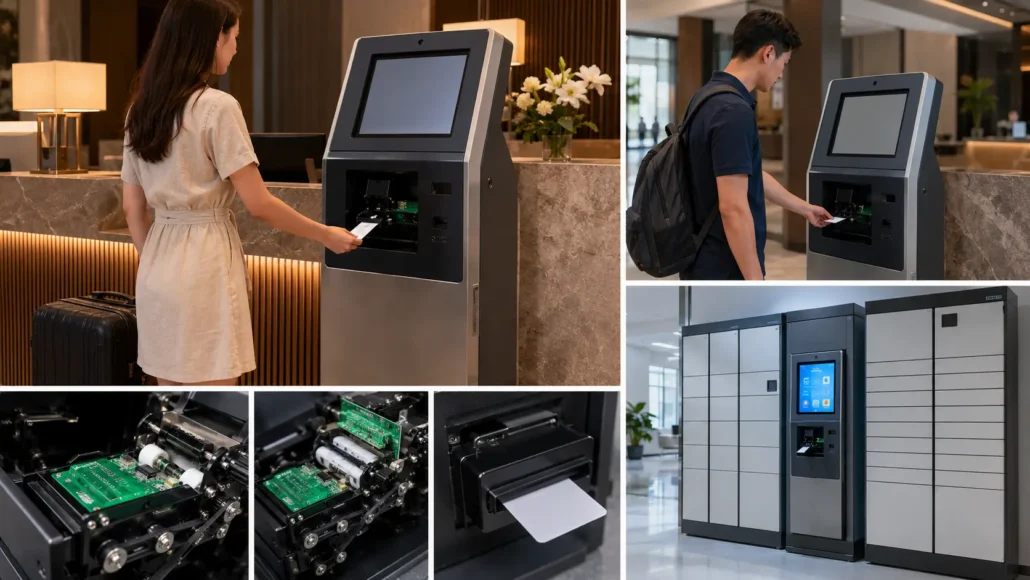
Common Questions System Integrators Ask
Can RFID cards be encoded before dispensing?
Yes. Many systems encode credentials before issuing the card.
Which RFID technology should be selected?
The answer depends on security requirements, access control systems and deployment goals.
Is RFID more secure than magnetic cards?
In most modern deployments, RFID offers stronger security and authentication capabilities.
How important is SDK support?
SDK availability often determines how quickly a system can be integrated.
Does Linux support matter?
Many self-service platforms operate on Linux-based environments, making Linux compatibility important.
Recommended RFID Card Issuance Solutions
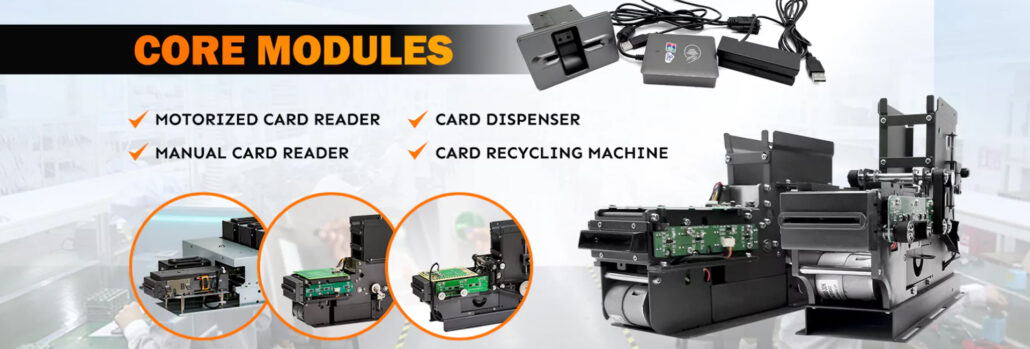
SNR-K750-L
Recommended for:
- Hotel self check-in kiosks
- RFID room card issuance
- Hospitality automation systems
Advantages:
- RFID integration support
- Reliable motorized dispensing
- Stable unattended operation
SNR-CD212-M8
Recommended for:
- Visitor management systems
- Access control platforms
- Smart building applications
Advantages:
- Reliable card separation
- RFID compatibility
- Compact kiosk integration
SNR-K720
Recommended for:
- Membership card issuance
- General RFID credential projects
- Cost-sensitive deployments
Advantages:
- Flexible integration
- Practical deployment cost
- Proven reliability
What Successful RFID Card Issuance Projects Usually Have in Common
Successful deployments typically share several characteristics:
- Reliable RFID encoding
- Stable card dispensing
- Appropriate hopper design
- Strong SDK resources
- Clear access control integration
- Easy maintenance access
- Hardware selected for actual deployment conditions
Projects that prioritize these factors generally experience fewer operational issues and lower long-term maintenance costs.
Conclusion
RFID card issuance has become an essential function in modern self-service kiosks.
Successful deployments require more than a card dispenser capable of issuing cards. They require reliable RFID encoding, stable credential management, software integration support and long-term operational reliability.
Experienced system integrators therefore evaluate both RFID technology requirements and deployment realities before selecting hardware.
The most effective RFID card issuance system is the one that continues issuing valid credentials reliably after years of unattended operation.
Related Resources
- How to Choose a Motorized Card Dispenser for Self-Service Kiosks
- RFID Card Dispenser vs Magnetic Card Dispenser
- How to Choose a Card Dispenser for Hotel Self Check-In Kiosks
- How to Choose a Card Dispenser for Visitor Management Systems
- How to Choose a Card Dispenser for Smart Locker Systems
- Hotel Self Check-In Hardware Solutions
- Visitor Management Hardware Solutions
- Common RFID Card Dispensing Challenges in Self-Service Kiosks
- Why Card Hopper Design Matters More Than Most Teams Realize
FAQ
What is RFID card issuance?
RFID card issuance is the process of encoding and dispensing RFID credentials for authorized users.
Can RFID cards be encoded automatically?
Yes. Many RFID card issuance systems support automatic encoding before card delivery.
Which RFID technologies are commonly used?
MIFARE Classic, MIFARE DESFire, ISO14443 and ISO15693 are among the most common.
Is RFID more secure than magnetic stripe technology?
In most applications, RFID provides stronger security and authentication capabilities.
What industries use RFID card issuance systems?
Hospitality, visitor management, access control, healthcare, government services and smart lockers are among the most common applications.
Do RFID issuance systems require SDK support?
Most integration projects benefit significantly from SDKs, APIs and protocol documentation.
What causes RFID issuance failures?
Common causes include card quality variation, encoding issues, hopper design problems and insufficient maintenance.
Which SNRO models support RFID card issuance projects?
SNR-K750-L, SNR-CD212-M8 and SNR-K720 are commonly used in RFID credential issuance applications.