

Blog
How to Choose a Card Dispenser for Membership Card Issuing Terminals?

Introduction
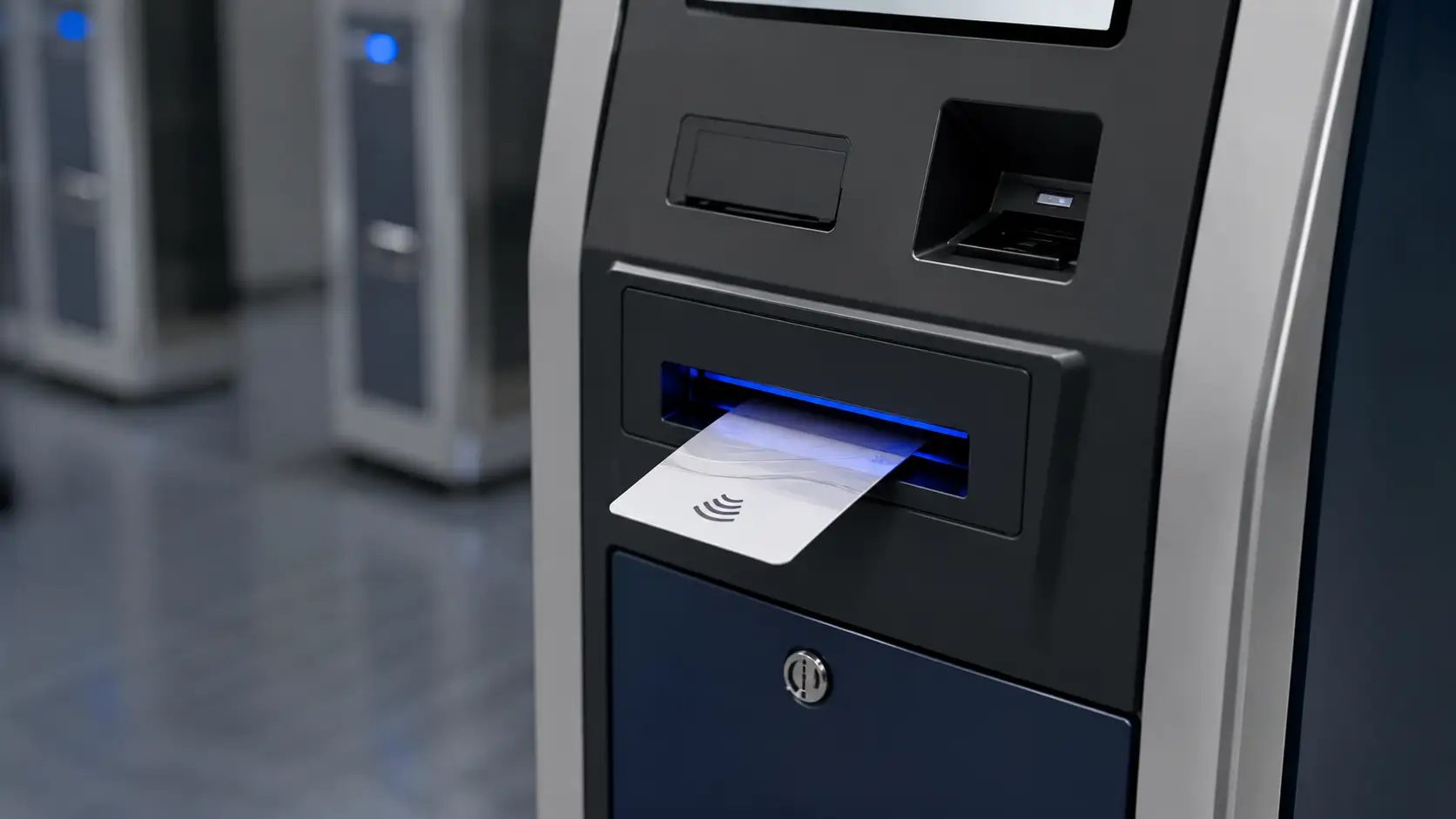
Membership card issuing terminals help businesses issue cards without staff at every counter. These systems may support loyalty cards, prepaid cards, RFID membership cards, visitor cards, access cards, or service cards.
In this workflow, the card dispenser is not just a mechanical output device. It connects account registration, payment, card identity, software control, and user collection.
If the dispenser jams, issues a card before the account is ready, fails to read or write data, or becomes difficult to refill, the terminal may need staff intervention. This reduces the value of self-service deployment.
For system integrators, kiosk manufacturers, membership platform providers, retail technology teams, and OEM solution providers, card dispenser selection should be planned early. It should be part of the terminal architecture, not a late hardware add-on.
This guide explains how to choose a card dispenser for membership card issuing terminals based on card type, issuing workflow, RFID or magnetic requirements, reader/writer needs, card capacity, interface, SDK support, maintenance access, and long-term operation.
Quick Answer
For many membership card issuing terminals, an RFID card dispenser or motorized card issuing module is a practical direction. It can support membership cards, prepaid cards, loyalty cards, access cards, and self-service registration workflows.
However, the best dispenser depends on the card and account workflow.
Choose based on:
– Card type and thickness
– RFID, IC, magnetic, or barcode workflow
– Pre-encoded card or write-before-issue requirement
– Account binding method
– Card capacity and refill frequency
– Reader/writer integration
– USB, RS232, or other interface requirement
– SDK or communication protocol support
– Cabinet space and card outlet design
– Maintenance access and card jam handling
– Error handling for failed registration, failed payment, or failed card issue
– Pilot testing and rollout plan
If the terminal only issues preloaded membership cards, simple card dispensing may be enough. If the terminal needs account binding, prepaid value, or access permission writing, reader/writer integration and software error handling become more important.
Basic Concepts
What Is a Card Dispenser for a Membership Card Issuing Terminal?
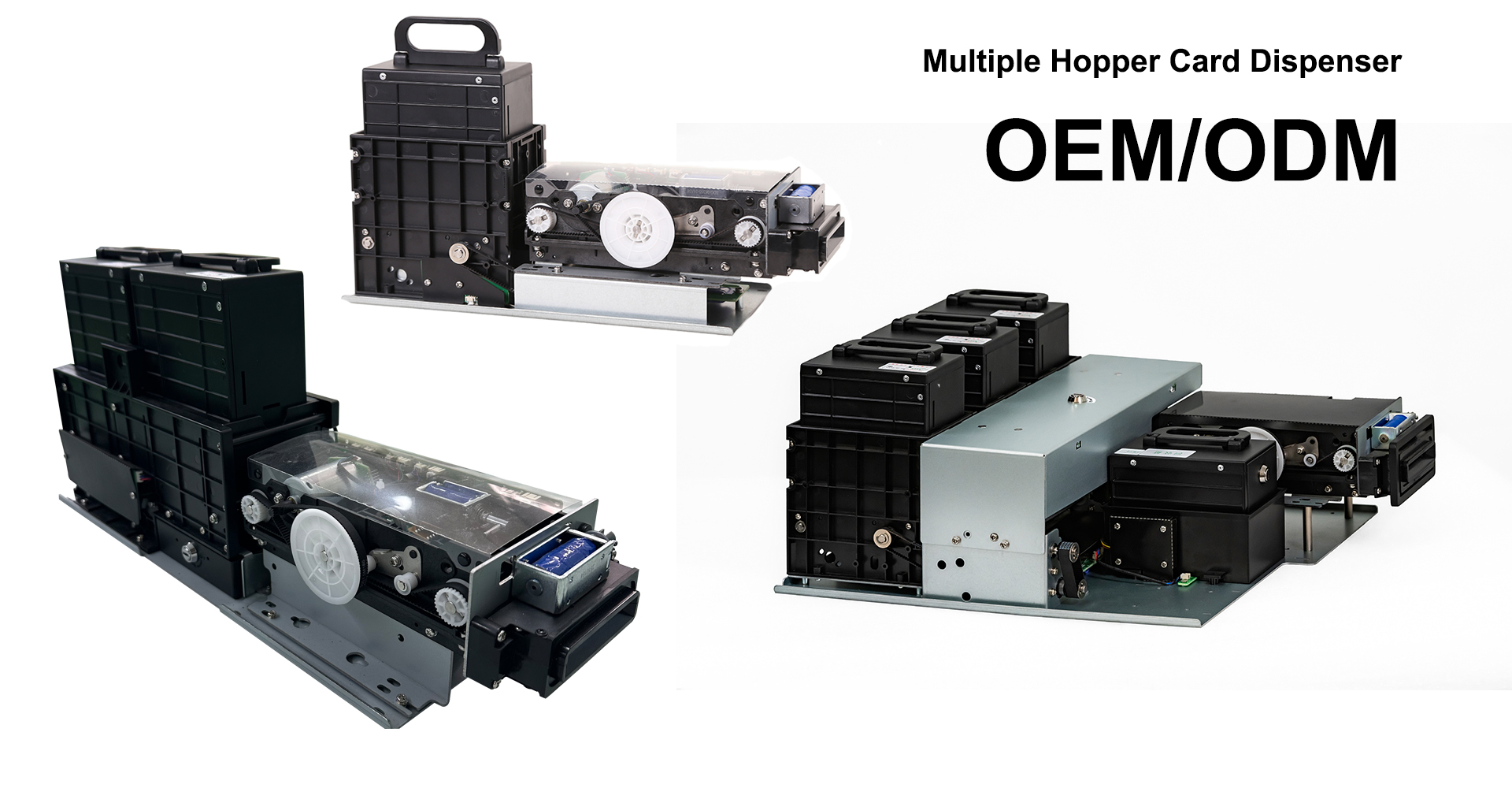
A card dispenser for a membership card issuing terminal is an embedded module that stores, separates, moves, and issues cards from a self-service kiosk or card issuing machine.
Depending on the project, it may support:
– RFID membership cards
– Loyalty cards
– Prepaid cards
– Access cards
– Visitor cards
– Service package cards
– Employee or staff cards
– Temporary cards
– Replacement cards
The card dispenser must work with the kiosk software, account system, payment module, card reader or writer, enclosure design, and maintenance workflow.
Why Membership Card Issuing Needs More Than Simple Dispensing
Membership card issuing often includes account logic. The system may need to connect the issued card with a user profile, phone number, payment record, membership level, stored value, or access permission.
This means the terminal may need to manage:
– User registration
– Payment confirmation
– Card identity
– RFID or IC card writing
– Account binding
– Receipt printing
– Failed issue recovery
– Remote inventory updates
The dispenser should therefore be evaluated as part of the full issuing workflow.
Comparison Layer
RFID Card Dispenser vs Magnetic Card Dispenser
The first decision is the card technology.
| Selection Point | RFID Card Dispenser | Magnetic Card Dispenser |
|---|---|---|
| Common use | Membership, loyalty, access, prepaid systems | Legacy membership or payment systems |
| User experience | Contactless tap workflow | Swipe or read path workflow |
| Account binding | Common in modern membership platforms | Depends on existing system |
| Maintenance | No magnetic stripe wear issue | Stripe and reader condition matter |
| Best fit | New self-service membership terminals | Existing magnetic card programs |
For many new membership card issuing terminals, RFID is a practical direction. It supports contactless use and can fit loyalty, prepaid, access, and account workflows.
Pre-Encoded Card vs Write-Before-Issue
Some terminals issue cards that are already prepared. Others write data before issuing the card.
| Workflow | Typical Use | Selection Focus |
|---|---|---|
| Pre-encoded card issuing | Card already has ID or account range | Reliable dispensing and inventory logic |
| Read before issue | Confirm card ID before release | Reader integration and software control |
| Write before issue | Add account or value data before release | Writer integration and error handling |
| Issue then activate | Bind card after physical output | Software state control |
| Replacement card issuing | Rebind account to new card | Verification and exception handling |
If the project needs writing or verification, the reader/writer workflow should be tested before the dispenser is finalized.
Single Card Type vs Multi-Card Type
Some membership terminals issue only one card type. Others support different tiers or service programs.
| Requirement | Single Card Type | Multi-Card Type |
|---|---|---|
| Best fit | One membership card program | Multiple tiers, brands, or card SKUs |
| Hardware design | Simpler hopper strategy | More complex storage or selection logic |
| Refill process | Easier for staff | Refill accuracy becomes critical |
| Software logic | Simple inventory count | SKU mapping and error handling |
| Use case | Basic loyalty card issue | Gold / VIP / prepaid / access card programs |
If your terminal supports multiple card types, hardware layout and software inventory logic should be planned together.
Architecture / Workflow Layer
A typical membership card issuing terminal workflow may look like this:
**User Interface -> Registration / Payment Software -> Card Dispenser / Reader Writer -> Account Platform -> Receipt Printer -> Remote Management System**
Depending on the project, the terminal may also include:
– Touchscreen
– Payment terminal
– QR code or barcode scanner
– RFID card dispenser
– RFID reader or writer
– Thermal receipt printer
– Industrial mini PC or Android controller
– Network module
– Membership management platform
– CRM or loyalty system
– Access control or service platform
– Remote monitoring software
The card dispenser should be selected before the enclosure is finalized. Late changes may affect card outlet position, card hopper space, service door design, cable routing, reader/writer testing, and software workflow.
What Experienced Integrators Usually Evaluate
Experienced membership terminal teams do not choose a card dispenser only by card capacity. They evaluate the complete issuing and account workflow.
Important questions include:
– What type of card will the terminal issue?
– Does the card need RFID, IC, magnetic, or barcode support?
– Is the card pre-encoded or written inside the terminal?
– Does the system need to read the card ID before issuing?
– How is the card linked to a user account?
– Is payment required before card issuing?
– How many cards should the terminal store before refill?
– Can staff refill cards quickly and correctly?
– What happens if card issuing fails after payment?
– What happens if account binding fails after card issue?
– Does the dispenser fit the cabinet and card outlet?
– Is USB, RS232, or another interface required?
– Are SDK or communication protocol resources available?
– Can the software detect empty card, card jam, or issue failure states?
– Can the same hardware direction support pilot testing and rollout?
These questions matter because a membership card issuing terminal often handles payment, identity, account data, and physical card output in one process.
Deployment Reality
Membership card issuing terminals often look simple during prototype testing. A sample card is dispensed. The software displays success. The card outlet looks clean.
Field operation is different.
Users may register slowly, cancel midway, enter wrong data, or retry payments. Staff may refill cards during operating hours. Some cards may bend, stick together, or be loaded incorrectly. Remote operators may need accurate inventory and error status.
This creates several real deployment requirements:
– Test the dispenser with real production cards.
– Confirm card stack behavior under full and low-card conditions.
– Verify card outlet position and user collection behavior.
– Map payment success, card issue success, and account binding success states.
– Confirm card jam and empty-card status reporting.
– Plan refill procedures for card types or tiers.
– Test remote inventory and exception reporting.
– Review cabinet service access before tooling.
– Run pilot tests with real membership workflow data.
For rollout projects, the dispenser should be tested as part of the complete terminal workflow. It should not be tested only as a standalone module.
Application Scenarios
Retail Loyalty Card Issuing Terminals
Retailers may use self-service terminals to issue loyalty cards after registration or payment. The card should be linked correctly with the user profile or loyalty account.
Gym and Fitness Membership Kiosks
Gyms may issue RFID membership cards for entry, class booking, or locker access. Reader/writer integration and account binding are important.
Club and Venue Membership Machines
Clubs, venues, and entertainment sites may issue tiered membership cards or prepaid service cards. Multi-card-type planning may be required.
Prepaid Card Issuing Terminals
Prepaid card terminals may issue cards after payment. The system must handle failed payment, failed issuing, and failed account activation states.
Visitor or Temporary Membership Card Terminals
Some terminals issue temporary cards for visitors, members, or short-term access. Card collection or recycling may be considered if cards are returned later.
Service Package Card Kiosks
Service businesses may issue cards for packages, stored value, or repeat-use programs. The dispenser should match the card platform and software workflow.
How to Choose
1. Confirm the Card Type
Start with the real card. Do not choose the dispenser only from a module list.
Confirm:
– Card size
– Card thickness
– RFID, IC, magnetic, or barcode requirement
– Card material
– Card surface friction
– Card stiffness
– Printed area or card orientation
– Whether the card is new, reused, or returned
Card feeding reliability depends on real card behavior, not only nominal card size.
2. Define the Issuing Workflow
Map the workflow before choosing the hardware.
Common workflows include:
– Register account, then issue card
– Pay first, then issue card
– Read card ID, bind account, then issue card
– Write card data, verify, then issue card
– Issue card, then activate account
– Replace card after identity or account verification
The correct dispenser direction depends on where the card issuing step sits in the software flow.
3. Decide Whether Read/Write Is Required
Some projects only need to dispense pre-prepared cards. Others need to read or write card data before issuing.
If the system needs RFID encoding, stored value, or account binding, confirm:
– Reader or writer type
– Communication protocol
– Software control method
– Error handling process
– Card verification after writing
– Account update after successful issue
This step is important for membership, loyalty, prepaid, and access workflows.
4. Check Card Capacity and Refill Access
Card capacity affects maintenance frequency. A small hopper may be acceptable for low-traffic terminals. A high-traffic site may need more capacity or easier refill access.
Review:
– Expected daily card issue volume
– Card refill schedule
– Service door position
– Hopper access
– Staff refill process
– Empty-card detection requirement
– Multi-card-type refill accuracy
If staff cannot refill cards quickly, the terminal may lose new registrations or card sales.
5. Review Cabinet Space and Card Outlet Design
The dispenser must fit the cabinet with enough space for:
– Card hopper
– Card transport path
– Reader or writer module
– Card outlet
– Cable routing
– Mounting structure
– Jam clearing
– Service access
The card outlet should be easy for users to understand. Poor outlet design can create abandoned cards or support requests.
6. Confirm Interface and SDK Support
Membership card issuing terminals may use Windows, Linux, Android, embedded controllers, or custom control boards.
Before selecting the dispenser, confirm:
– USB, RS232, or other interface requirement
– SDK availability
– Communication protocol availability
– Status feedback
– Error code handling
– Empty-card detection
– Card jam detection
– Software integration support
This reduces integration risk during prototype testing.
7. Test With Real Cards and Real Workflow
Sample cards are not enough. Test the dispenser with production cards, real registration flow, real payment flow, real account binding logic, and real cabinet constraints.
Also test:
– Full card stack condition
– Low card stack condition
– Bent or worn cards
– Failed payment recovery
– Failed account binding recovery
– Failed card issue recovery
– Power interruption scenarios
– Remote inventory update
These tests help identify problems before mass production.
Recommended Models
Different membership card issuing projects require different card dispenser directions. The final selection should be confirmed according to card type, reader/writer requirement, interface, cabinet design, software platform, and deployment quantity.
SNR-K750-L RFID Card Dispenser Direction
The SNR-K750-L direction may be considered for RFID membership card issuing workflows where the terminal needs to dispense membership, loyalty, prepaid, or access cards.
**Typical fit:**
– Membership card issuing terminals
– Loyalty card kiosks
– RFID access card workflows
– Prepaid card issuing systems
– Self-service registration terminals
**Best-fit direction:**
– Use when RFID card issuing is central to the workflow.
– Verify card type, reader/writer needs, interface, and cabinet space before selection.
SNR-CD212-M8 Card Dispenser Direction
The SNR-CD212-M8 direction may fit projects that require motorized card issuing with controlled card movement and integration planning.
**Typical fit:**
– Self-service card issuing machines
– Membership and loyalty kiosks
– Payment and prepaid card terminals
– OEM equipment with embedded card issuing
**Best-fit direction:**
– Use when the project needs an embedded dispenser direction for unattended issuing.
– Verify card stack behavior, communication protocol, and maintenance access.
SNR-K720 Card Dispenser Direction
The SNR-K720 direction may be considered for general card issuing workflows where the project needs a practical embedded dispenser direction.
**Typical fit:**
– Loyalty card issuing
– Membership card vending
– Service package card issuing
– Visitor or temporary card issuing
– Self-service equipment projects
**Best-fit direction:**
– Use when the workflow is mainly card dispensing rather than complex card recycling.
– Verify card format, hopper capacity, interface, and software control needs.
Card Collector or Recycling Direction
Some membership systems may require returned card collection or reusable temporary cards. This is less common for standard membership issuing, but it may appear in visitor, club, or temporary access workflows.
**Typical fit:**
– Temporary membership cards
– Returned visitor cards
– Reusable access cards
– Closed-loop venue card systems
**Best-fit direction:**
– Use only when the business process clearly requires card return or reuse.
– Verify collection path, security, software states, and maintenance process.
What Successful Deployments Usually Have in Common
Successful membership card issuing terminal deployments usually share several patterns:
– The real card type is confirmed before dispenser selection.
– The issuing workflow is mapped before cabinet design.
– The dispenser is selected before enclosure tooling.
– Card refill access is simple for staff.
– Card outlet position is easy for users to understand.
– Reader/writer requirements are confirmed early.
– SDK and communication protocol resources are checked before prototype.
– Error handling is planned for registration, payment, account binding, and card issue states.
– Pilot testing uses real cards, real software, and realistic site conditions.
These details may look small during planning. In the field, they often decide whether the terminal can issue cards reliably without staff support.
Conclusion
Choosing a card dispenser for membership card issuing terminals is not only about card capacity or module cost. The dispenser must match the card type, account workflow, payment process, cabinet design, maintenance workflow, and long-term deployment plan.
For many membership and loyalty systems, an RFID card dispenser direction is a practical starting point. For simple card issuing, a single dispensing workflow may be enough. For prepaid, stored value, or access permission workflows, reader/writer integration and software error handling become more important.
The safest approach is to test the dispenser with real cards, real registration logic, real account workflows, and realistic cabinet constraints before mass production.
Related Resources
– Card Dispenser Product Hub
– Self-Service Kiosk System Hub
– RFID Card Dispenser Resources
– Card Dispenser Selection Guide
– Card Dispenser SDK Integration Guide
– SNR-K750-L Product Page
– SNR-K720 Product Page
– SNR-CD212-M8 Product Page
– Download Center
– Access Control Card Dispenser Guide
FAQ
What card dispenser is suitable for membership card issuing terminals?
For many membership card issuing terminals, an RFID card dispenser or motorized card issuing module is a practical direction. It can support membership cards, loyalty cards, prepaid cards, and self-service registration workflows.
Should a membership card terminal use RFID cards or magnetic cards?
RFID cards are often practical for new membership and loyalty systems because they support contactless workflows. Magnetic cards may be useful when the existing membership system already depends on magnetic stripe cards.
Does a membership card dispenser need a reader or writer?
It depends on the workflow. If cards are pre-encoded, simple dispensing may be enough. If the terminal must bind a card to an account or write membership data, reader/writer integration should be evaluated.
How much card capacity does a membership card terminal need?
Capacity depends on daily card issue volume and refill frequency. High-traffic locations need enough card storage or easy refill access to reduce service interruptions.
What should be tested before choosing a card dispenser?
Test real cards, card stacks, registration flow, payment flow, reader/writer behavior, failed issue recovery, account binding recovery, jam handling, refill access, and software status feedback.
Can one terminal issue different membership card types?
Yes, but multi-card-type issuing requires careful hopper planning, SKU mapping, refill procedure, and software error handling.
Can SNRO recommend a card dispenser for membership card issuing terminals?
Yes. SNRO can help evaluate a suitable card dispenser direction based on card type, card thickness, RFID or magnetic workflow, interface, software platform, cabinet space, and expected deployment quantity.