

Blog
Single Hopper vs Multi-Hopper Card Dispenser: Which Is Better?

Introduction
When selecting a motorized card dispenser for a self-service kiosk project, one of the earliest architectural decisions involves hopper configuration.
Should the system use a single hopper card dispenser or a multi-hopper card dispenser?
At first glance, the answer may seem simple. Many teams assume that more hoppers automatically provide greater flexibility and therefore represent a better solution.
In reality, the most suitable choice depends on project requirements, credential workflows, maintenance strategy and deployment environment.
Experienced system integrators often evaluate hopper architecture early because it directly affects reliability, maintenance complexity, software integration and long-term operational costs.
This guide explains the differences between single hopper and multi-hopper card dispensers and helps project teams determine which solution is best suited for their application.
Why Hopper Architecture Matters
The hopper is responsible for storing and feeding cards into the dispensing mechanism.
Although often overlooked during early project discussions, hopper design directly affects:
- Card separation reliability
- Double-card prevention
- Refill procedures
- Maintenance requirements
- Credential management flexibility
- Hardware footprint
- Deployment scalability
In many real-world deployments, hopper architecture has a greater impact on operational efficiency than card capacity specifications alone.
What Is a Single Hopper Card Dispenser?
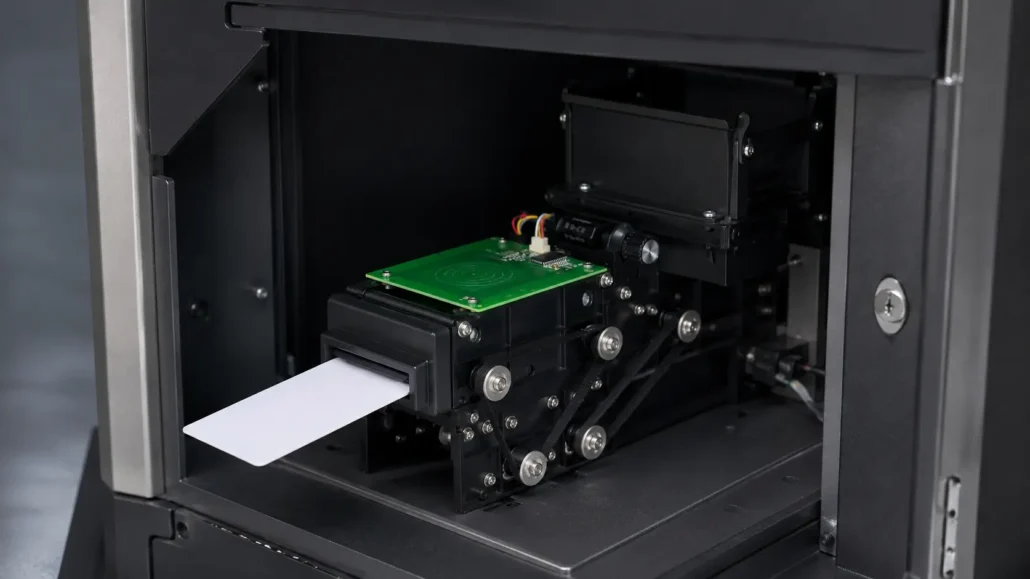
A single hopper card dispenser contains one card storage hopper.
All cards issued by the system are drawn from the same card stack.
Typical Characteristics
- One card type
- Simple dispensing workflow
- Compact structure
- Lower hardware cost
- Easier maintenance
Common Applications
- Hotel self check-in kiosks
- Visitor registration terminals
- Membership card issuance kiosks
- Smart locker systems
- Access control registration stations
For many self-service projects, a single hopper dispenser provides all required functionality.
What Is a Multi-Hopper Card Dispenser?
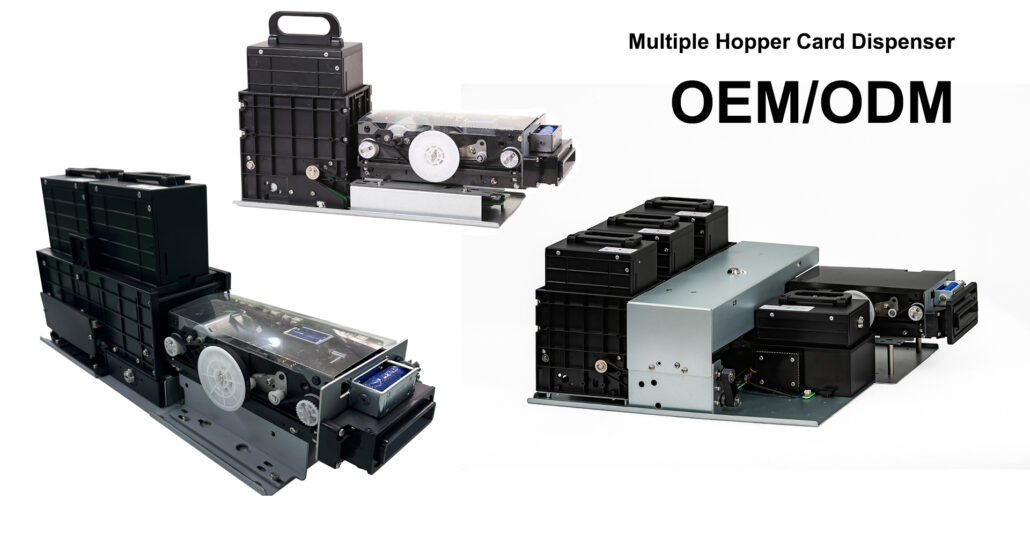
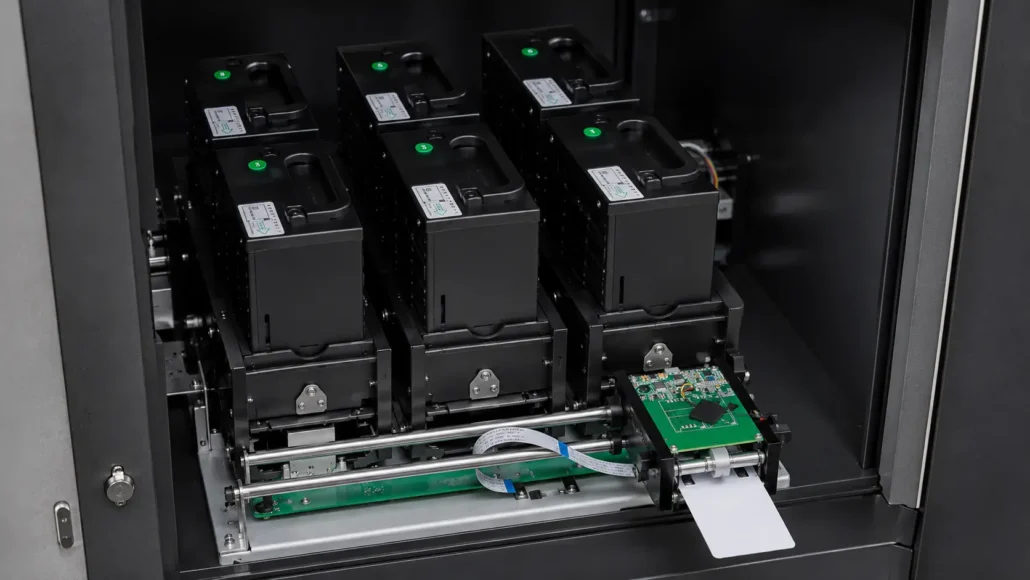
A multi-hopper card dispenser contains two or more independent card storage hoppers.
The system can select cards from different hoppers based on software instructions.
Typical Characteristics
- Multiple card types
- Dynamic card selection
- Higher operational flexibility
- Larger hardware footprint
- More complex integration
Common Applications
- Government service kiosks
- Healthcare systems
- Smart city deployments
- Enterprise access management
- High-security credential issuance
Multi-hopper systems allow kiosks to issue different card categories without requiring manual card replacement.
What Experienced Integrators Usually Evaluate First
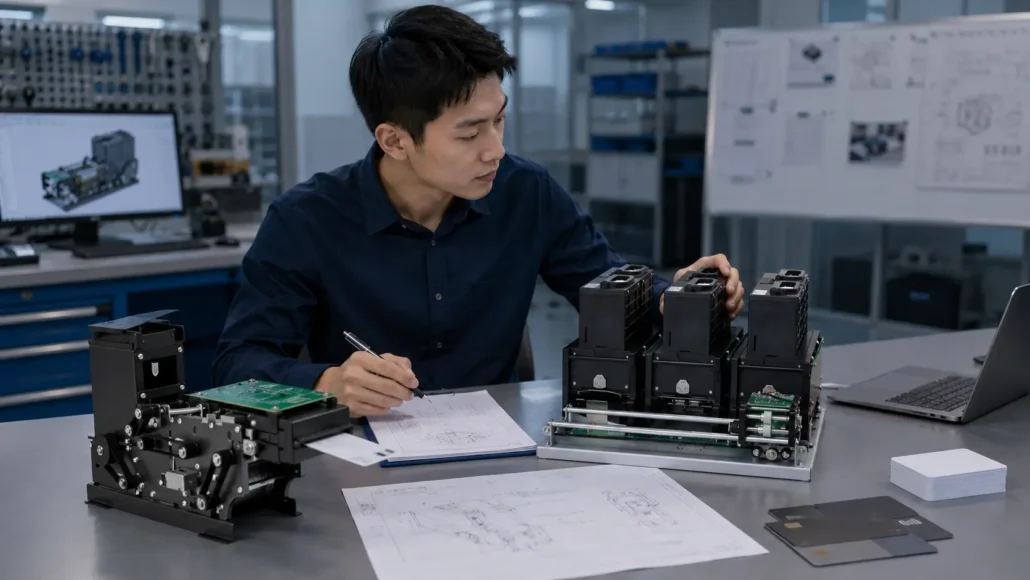
When comparing hopper architectures, experienced integrators rarely focus only on card capacity.
Typical evaluation criteria include:
- Number of card types required
- Card issuance workflow
- Maintenance accessibility
- RFID compatibility
- Software integration complexity
- Deployment scale
- Long-term operational stability
- Hardware footprint
- Service requirements
The most appropriate architecture is usually determined by workflow requirements rather than specifications alone.
Advantages of Single Hopper Card Dispensers
Simpler Integration
A single hopper requires fewer control routines and simpler software logic.
Higher Reliability
Fewer moving parts often result in lower mechanical complexity.
Easier Maintenance
Card refilling and troubleshooting are generally more straightforward.
Lower Hardware Cost
Single hopper systems typically reduce both equipment cost and installation complexity.
Smaller Installation Space
This is particularly important in compact kiosk cabinets.
For many deployments, these advantages outweigh the benefits of additional hopper capacity.
Advantages of Multi-Hopper Card Dispensers
Multiple Card Types
Different cards can be stored simultaneously.
Examples include:
- Visitor cards
- Contractor cards
- Employee credentials
- VIP cards
Dynamic Card Selection
The kiosk can select the appropriate credential automatically.
Greater Operational Flexibility
Useful when different user groups require different credentials.
Reduced Manual Card Replacement
Multiple card types can be managed without operator intervention.
Better Support for Complex Workflows
Large organizations often benefit from flexible card management.
Why Reliability Often Matters More Than Flexibility
Many teams initially prefer multi-hopper systems because they appear more versatile.
However, deployment experience often reveals a different reality.
Additional hoppers may introduce:
- More sensors
- More motors
- More control logic
- More maintenance points
- More software complexity
If a project only requires one card type, the additional flexibility may provide little operational value.
For this reason, many successful deployments intentionally select single hopper systems even when multi-hopper solutions are available.
Hotel Self Check-In Applications
Most hotel self check-in kiosks issue only one type of credential:
- RFID room card
As a result, single hopper card dispensers are often the preferred choice.
Typical advantages include:
- Simpler maintenance
- Lower cost
- Smaller cabinet footprint
- Reliable card issuance
Multi-hopper architectures are generally considered only when multiple card categories must be managed simultaneously.
Visitor Management Applications
Visitor management workflows vary considerably.
Small and Medium Deployments
Often use:Single Hopper
because only visitor credentials are issued.
Large Enterprise Deployments
May benefit from:Multi-Hopper
to separate:
- Visitor credentials
- Contractor credentials
- Temporary employee credentials
The appropriate choice depends on credential management requirements.
Smart Locker Applications
Most smart locker systems use:Single Hopper
because users typically receive the same credential type.
However, specialized deployments may require:
- Visitor cards
- Staff cards
- Temporary access credentials
In these cases, multi-hopper architecture may provide operational advantages.
Deployment Reality: What Changes After Installation
Laboratory testing often focuses on functionality.
After deployment, operational factors become more important.
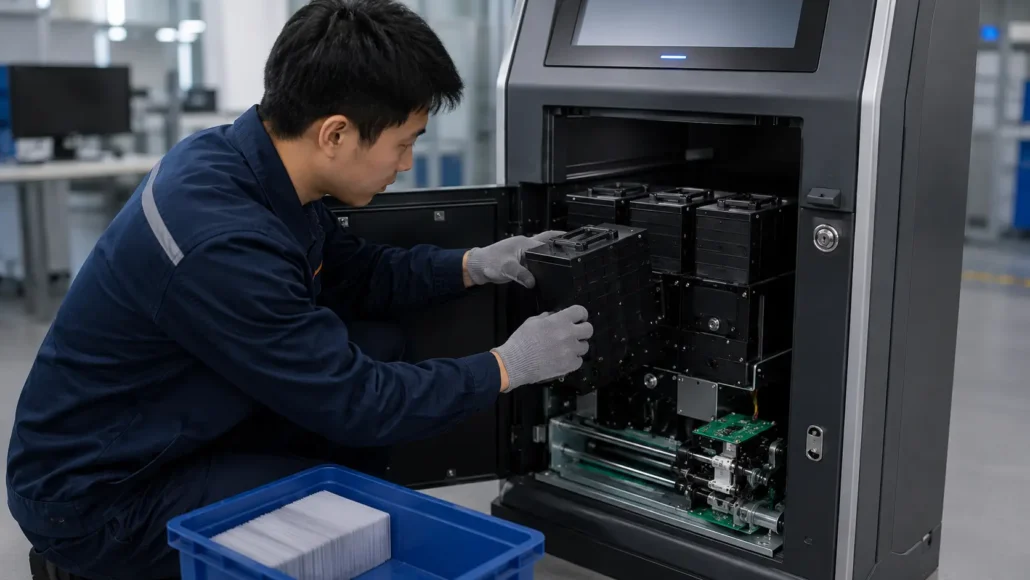
Card Refilling
Single hopper systems are usually faster to refill.
Maintenance Efficiency
Fewer components generally reduce service time.
Training Requirements
Multi-hopper systems often require more operator training.
Inventory Management
Multiple card types increase inventory complexity.
Long-Term Reliability
Additional hardware components may increase maintenance requirements.
Experienced integrators evaluate these factors before selecting hopper architecture.
Common Questions System Integrators Ask
Is a multi-hopper card dispenser always better?
Not necessarily. The appropriate solution depends on workflow requirements.
How many card types justify a multi-hopper system?
Projects requiring multiple credential categories often benefit from multi-hopper architecture.
Which architecture is easier to maintain?
Single hopper systems are generally easier to maintain.
Which architecture is more reliable?
Reliability depends on implementation, but simpler systems often have fewer maintenance requirements.
Is multi-hopper architecture required for RFID cards?
No. RFID support is independent of hopper configuration.
Which solution is better for hotels?
Most hotel self check-in projects use single hopper dispensers.
Which solution is better for visitor management?
The answer depends on credential complexity and access management requirements.
Recommended Card Dispenser Solutions
SNR-K750-L
Recommended for:
- Hotel self check-in kiosks
- RFID room card issuance
- Visitor management systems
Advantages:
- Reliable motorized dispensing
- RFID support
- Compact integration
SNR-CD212-M8
Recommended for:
- Visitor management projects
- Access control systems
- Smart locker deployments
Advantages:
- Stable card separation
- Easy maintenance
- Integration-friendly architecture
SNR-K720
Recommended for:
- Membership card issuance
- General self-service kiosks
- Cost-sensitive projects
Advantages:
- Flexible deployment
- Reliable operation
- Practical integration cost
What Successful Card Issuance Deployments Usually Have in Common
Successful projects typically share several characteristics:
- Appropriate hopper architecture
- Reliable card separation
- Strong SDK resources
- Easy maintenance access
- Clear credential management workflows
- Hardware selected for actual deployment conditions
Projects that prioritize these factors often experience lower operating costs and fewer service interruptions.
Conclusion
Choosing between a single hopper and multi-hopper card dispenser is not simply a matter of selecting the most advanced hardware.
The best solution depends on card issuance workflows, credential management requirements, maintenance strategy and deployment scale.
For many hotel, visitor management and smart locker applications, a single hopper dispenser provides the optimal balance of reliability, simplicity and cost efficiency.
Multi-hopper systems become valuable when multiple credential types must be managed simultaneously.
The most successful deployments are usually those that select the architecture that matches the actual operational requirements rather than the one with the largest number of features.
Related Resources
- How to Choose a Motorized Card Dispenser for Self-Service Kiosks
- RFID Card Issuance in Self-Service Kiosks: What Integrators Should Know
- RFID Card Dispenser vs Magnetic Card Dispenser
- How to Choose a Card Dispenser for Hotel Self Check-In Kiosks
- How to Choose a Card Dispenser for Visitor Management Systems
- How to Choose a Card Dispenser for Smart Locker Systems
- Why Card Hopper Design Matters More Than Most Teams Realize
- Why Double-Card Issues Happen in Card Dispenser Systems
FAQ
What is a single hopper card dispenser?
A single hopper card dispenser stores and issues cards from one card stack.
What is a multi-hopper card dispenser?
A multi-hopper card dispenser contains multiple card storage hoppers and can issue different card types.
Which architecture is more reliable?
Many deployments prefer single hopper systems because of their simpler structure and maintenance requirements.
Can multi-hopper systems issue RFID cards?
Yes. RFID support depends on the card and reader technology, not the hopper configuration.
Are multi-hopper systems more expensive?
Generally yes, due to additional hardware and integration complexity.
Which solution is better for hotel self check-in kiosks?
Most hotel deployments use single hopper card dispensers.
Which solution is better for visitor management systems?
The answer depends on how many credential categories must be managed.
How important is hopper design?
Hopper design directly affects dispensing reliability, maintenance requirements and long-term operational stability.