


Fan-fold Ticket Printer
High-Capacity Ticket Printing for Self-Service Kiosks
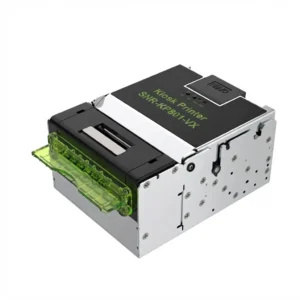
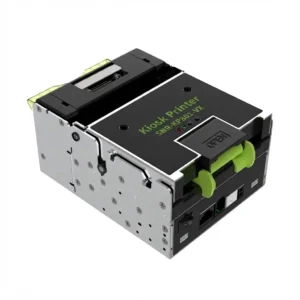
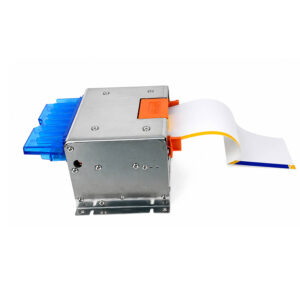
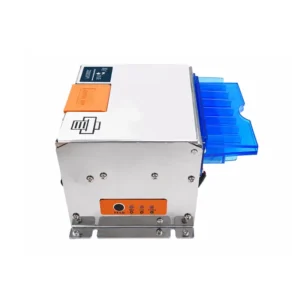
A fanfold thermal ticket printer is designed for self-service terminals that require a large paper capacity and reliable continuous ticket output.
Instead of using a conventional paper roll, the printer feeds continuous fanfold or Z-fold thermal media from an external paper stack or paper box. Depending on the ticket size and paper thickness, a single stack can typically hold 2,000–3,000 tickets.
This makes the technology suitable for applications where frequent paper replacement is not practical, such as airport kiosks, ticket vending machines, tourist attraction terminals and other unattended systems.
Compared with a standard receipt printer, a fanfold ticket printer is typically selected when the project requires:
- Higher media capacity
- Wider ticket formats
- Support for thicker ticket stock
- Accurate media positioning
- Integration into an unattended kiosk or terminal
Key Features
High-Capacity Fanfold Media
A fanfold paper stack can hold thousands of tickets in a compact storage area. This reduces the frequency of paper replacement compared with a conventional roll-paper design.
Support for Different Ticket Formats
Depending on the printer model, media widths can typically range from 51 mm to 83 mm, covering narrow parking tickets, admission tickets and wider boarding-pass formats.
Handles Thicker Ticket Media
Fanfold ticket printers can support media from approximately 0.08 mm to 0.25 mm, depending on the mechanism and paper characteristics.
Flexible Media Positioning
Black mark, gap or hole detection can be used to identify the correct print position for each ticket.
Designed for System Integration
The printer can be integrated into self-service terminals through interfaces such as USB or RS-232, with status feedback available depending on the model.
Media & Technical Capabilities
| Item | Typical Specification |
|---|---|
| Printing Method | Direct Thermal |
| Media Supply | Fanfold / Z-fold |
| Media Width | 51–83 mm |
| Media Thickness | 0.08–0.25 mm |
| Paper Capacity | Approx. 2,000–3,000 tickets |
| Positioning Method | Black Mark / Gap / Hole |
| Communication | USB / RS-232 |
| Cutting | Full Cut / Partial Cut, depending on model |
For custom ticket media, thickness is only one factor. Paper stiffness, surface coating, fold direction and positioning marks can also affect feeding performance.


Typical Applications
Airport Self-Service Check-In
Used for boarding pass and passenger document printing in self-service check-in terminals. Fanfold media is particularly useful where a large number of documents need to be available inside the kiosk.
Depending on the printer and media specification, wider formats such as 82.55 mm boarding-pass media can be supported.
Tourist Attractions and Theme Parks
Suitable for self-service admission ticketing systems. Variable information such as QR codes, barcodes, ticket numbers, dates and entry times can be printed during each transaction.
Thicker ticket stock can also be used where the ticket requires better durability or presentation.
Transportation Ticketing
Used in unattended ticket vending terminals for continuous ticket output. The printer can be integrated with payment modules, barcode scanners, card readers and industrial PCs as part of a complete terminal.
Parking Systems
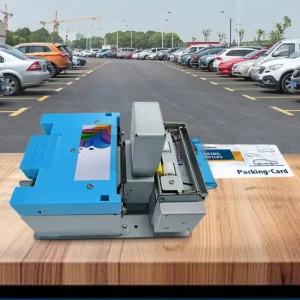
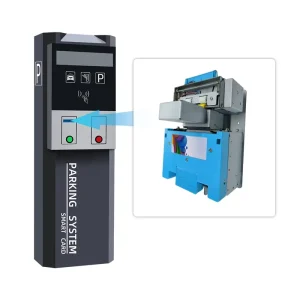
Suitable for parking tickets, payment vouchers and transaction documents. The required media width and paper format can be selected according to the terminal design.
Other High-Volume Ticketing Systems
Fanfold media can also be used in lottery terminals, queue management systems, coupon printing equipment and other applications where continuous ticket output is required.
Integration Considerations for Kiosk Manufacturers
In an actual kiosk project, paper width is only one of the parameters that should be considered.
The paper path, media stiffness, fold direction and available space for the paper stack can all affect feeding performance.
Before selecting a printer, we recommend confirming the following:
1. Ticket Size
Provide the exact ticket width and length.
2. Media Thickness and Material
Confirm the paper thickness and material. If possible, provide a physical media sample for testing.
3. Positioning Method
Confirm whether the media uses:
- Black marks
- Gaps
- Holes
- Continuous media without positioning marks
4. Fanfold Direction
The folding direction and feeding orientation should match the printer paper path.
5. Installation Space
The printer dimensions are only part of the installation requirement. Space for the media stack and paper path must also be considered.
6. Paper Feeding Direction
Confirm whether the media will be supplied from the rear, bottom or another direction.
7. Output and Cutting Requirement
Confirm whether the application requires full cut, partial cut or continuous ticket output.
8. Communication and Software Environment
Confirm the required interface and operating system, such as Windows, Linux or Android.
For custom projects, testing with the actual ticket media is recommended before finalizing the printer configuration.
Fanfold Ticket Printer vs. Roll Paper Printer
| Feature | Fanfold Ticket Printer | Standard Roll Paper Printer |
| Media Supply | Fanfold / Z-fold stack | Paper roll |
| Paper Capacity | Typically 2,000–3,000 tickets | Depends on roll size |
| Media Thickness | Can support thicker ticket stock | Usually optimized for standard receipt paper |
| Ticket Formats | Suitable for different ticket sizes | Mainly receipt formats |
| Typical Applications | Tickets, boarding passes, vouchers | Receipts and transaction slips |
| Maintenance | Fewer paper changes in high-volume applications | Paper replacement depends on roll capacity |
The choice depends on the ticket format, printing volume and available installation space.
FAQ
What is a Fanfold Thermal Ticket Printer?
It is a thermal printer designed to use continuous fanfold or Z-fold ticket media instead of conventional paper rolls.
The media is supplied from an external stack or paper box and feeds continuously into the printer.
What Media Sizes Can It Support?
Typical models support media widths from approximately 51 mm to 83 mm and thicknesses from 0.08 mm to 0.25 mm.
The exact compatibility depends on the printer model and media characteristics.
How Many Tickets Can Be Loaded?
A typical fanfold media stack can contain approximately 2,000–3,000 tickets.
The actual quantity depends on ticket size, thickness and the available paper storage space.
Can It Be Used for Boarding Pass Printing?
Yes, provided that the printer supports the required media width, length, thickness and positioning method.
For airline or airport projects, the actual boarding-pass media should be tested before deployment.
What Positioning Methods Are Supported?
Depending on the printer model, black mark, gap or hole detection can be used for media positioning.
The correct sensor configuration should match the actual ticket design.
What Information Is Needed to Select a Suitable Printer?
To evaluate the correct model, please provide:
- Ticket width and length
- Media thickness and material
- Ticket or media sample
- Fanfold direction
- Black mark, gap or hole specification
- Required printing volume
- Available installation space
- Paper feeding direction
- Required communication interface
- Operating system or host platform
Find the Right Fanfold Ticket Printer for Your Project
A reliable ticket printing system depends on more than paper width and printing speed.
The media specification, paper path, sensor configuration and kiosk installation structure should all be evaluated together.
SNROTEK can help system integrators and kiosk manufacturers evaluate the appropriate printer configuration based on the actual ticket specification and terminal design.
Send us your ticket specification, media sample or kiosk layout for evaluation.